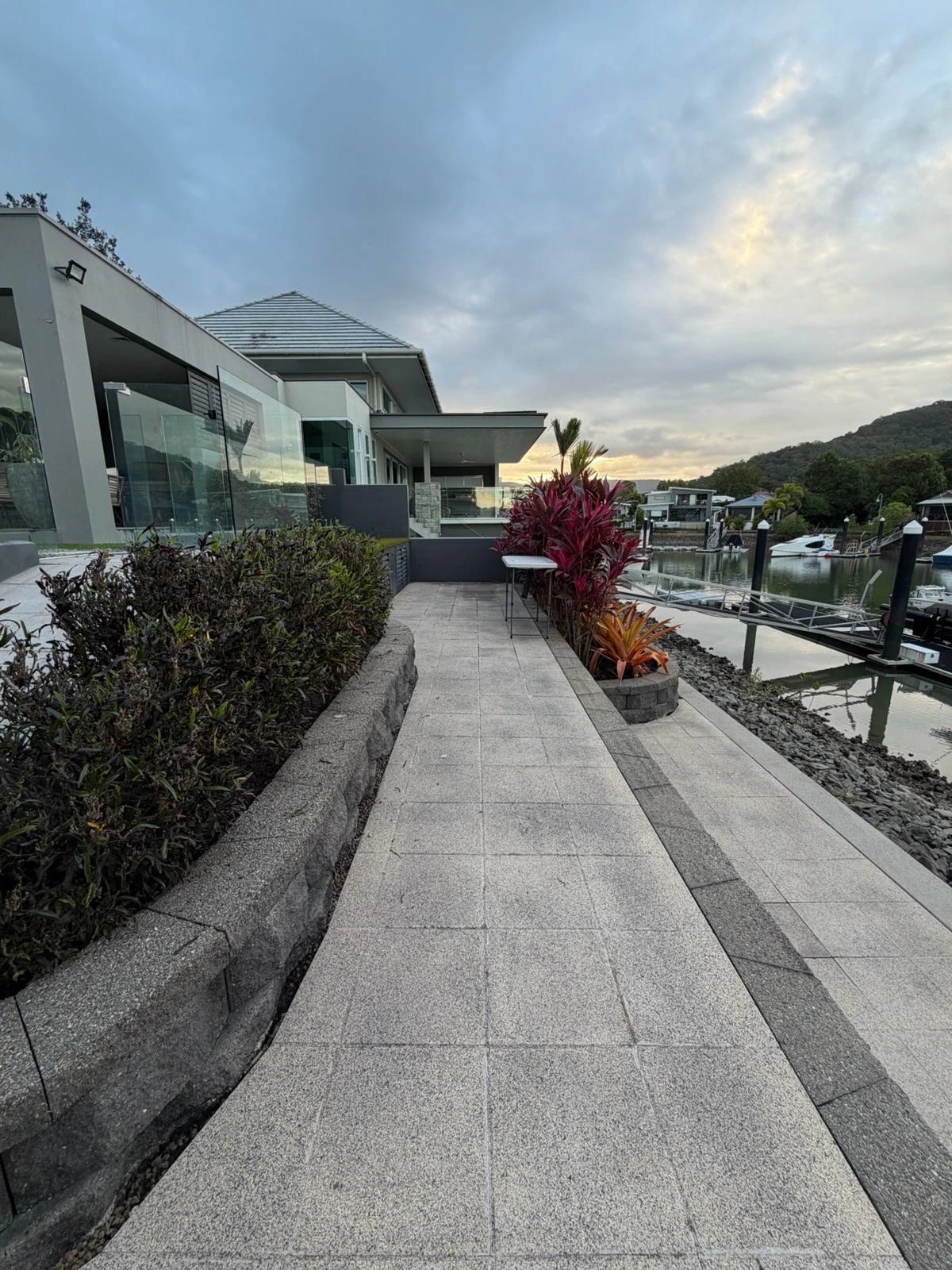
NO SQUEEGEE.NO SOAP.NO STREAKS.
De-ionised water has the minerals stripped out of it, which is what causes streaking in the first place. Fed through carbon-fibre poles, it cleans the glass and dries spot-free on its own.
STREAKS AREMINERALS.NOT TECHNIQUE.
The marks left on glass after a wash are not a sign of a careless job. They are the dissolved solids that were in the water, left behind on the surface when the water evaporated. Tap water is full of them, which is why the traditional answer involves detergent, a squeegee and the skill to remove every drop before it dries.
Take the minerals out and the problem disappears at the source. De-ionised water dries on glass and leaves nothing, because there is nothing in it to leave. No detergent film either — which matters more than it sounds, since soap residue is what makes glass attract dust again within a week.
It also means the glass can be cleaned from the ground. Water-fed carbon-fibre poles reach up to three storeys, so there is no ladder against your gutter, no one on your roof, and no footprints through the garden bed under the window.
“No. We use a de-ionised pure water system, which is streak-free.”
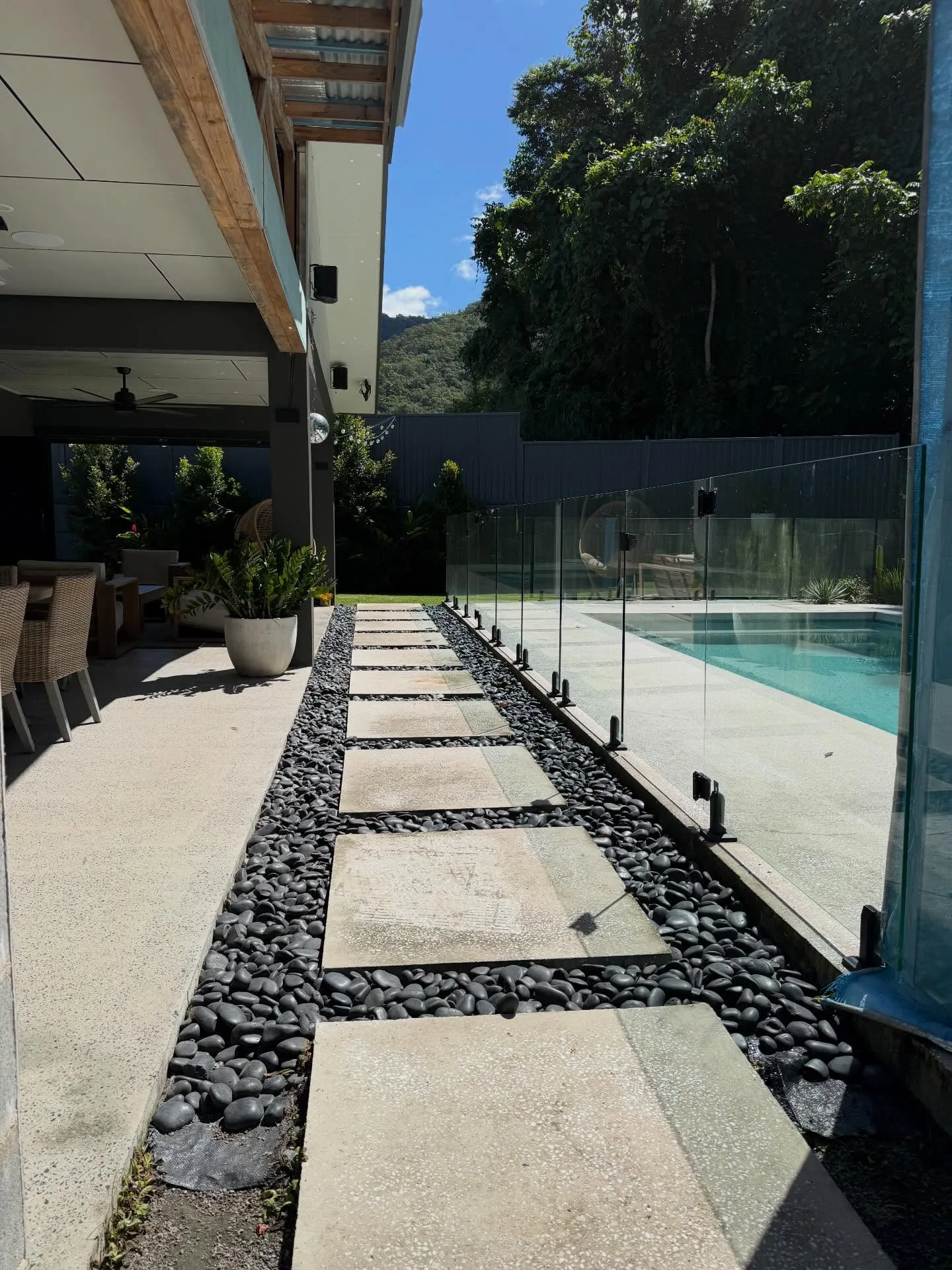
GLASS, FRAMESAND TRACKS,IN ONE PASS.
Because there is no squeegee involved, the frames get cleaned as thoroughly as the glass does. On a conventional wash, frames and sills are where the dirty water ends up — you get clean glass sitting in a filthy surround, and the first rain runs the dirt straight back down the pane.
The pure water system washes glass, frames, sills and screens together and lets the whole assembly dry on its own. The result holds far longer, because nothing has been left behind for the next lot of dust to stick to.
- Water
- Multi-stage de-ionised pure water
- Detergent
- None
- Poles
- Carbon fibre, water-fed
- Reach
- Up to three storeys from the ground
- Covers
- Glass, frames, sills and screens
- Finish
- Air dried, spot-free
WHAT THE WINDOWCLEAN COVERS.
Exterior glass
Windows, sliding doors, louvres and fixed panes on the outside face.
Frames, sills & tracks
Cleaned with the glass, which is the part most washes skip.
Flyscreens & security screens
Washed down in place, or removed first where that is practical.
Balustrades & pool fence glass
The glass that shows every mark, cleaned the same way.
Glass with a house wash
Commonly booked together — walls first, glass after, so nothing runs back down it.
See the pageWHAT’S NOTINCLUDED.
Interior glass
We work on the outside of buildings. Inside is someone else’s scope.
Hard water etching & scratches
Where minerals have physically etched the glass — common on shower screens and sprinkler-hit windows — cleaning won’t reverse it.
Paint, silicone & builder’s residue
Overspray and construction residue need a different approach. Raise it and we’ll tell you honestly whether it’s ours.
Window repairs & reglazing
Cracked panes, failed seals and fogged double glazing get photographed, not fixed.
Anything above three storeys
The pole reaches three. The insurance stops there too.
Cleaning in the rain
Pointless, and we won’t bill you for it. Weather-affected days get rescheduled.
WHAT WE CHECKAT THE GLASS.
Short list, and mostly about knowing what a wash can and cannot fix.
Existing damage
Chips, cracks, scratches and failed seals photographed before anything is touched.
Etching vs. dirt
Mineral etching looks like a stubborn stain and isn’t one. Knowing which you have saves you paying twice.
Screens & fittings
Whether screens can be safely removed, or are better washed in place.
What’s under the window
Beds, furniture and paving below the run get considered before water starts coming down.
Ground conditions
Pole work needs somewhere stable to stand. Soft beds and slopes change the approach.
Sequence with other work
If a house wash or roof clean is happening, glass goes last. Always.
HOW A WINDOWCLEAN RUNS.
Usually the quietest job we do, and frequently added to another one.
- 01
Tell us roughly how many
A rough window count and whether it is single or double storey is enough to start.
- 02
The measure
Confirmed from imagery and your photos, or in person if it is being quoted with other work.
- 03
The quote
Naming what is included — glass, frames, sills, screens — so there is no ambiguity.
- 04
Inspection & before photos
Existing damage and any etching identified and flagged to you first.
- 05
The wash
Pure water through the poles, glass and frames together, left to air dry spot-free.
- 06
After photos, then the invoice
Billed once you have confirmed you are happy with it.
THE THINGSPEOPLE ACTUALLYASK.
Still not covered? Ring Blake on 0495 090 010. Enquiries are answered the same day.
If you’re cleaning glass, does it leave streaks?
No. We use a de-ionised pure water system, which is streak-free.
Why does the glass get left wet?
Because pure water is meant to dry on it. There are no dissolved minerals in the water to leave a mark, so it evaporates and leaves nothing behind. Wiping it would actually be a step backwards.
Do you do inside windows too?
No. We are an exterior cleaning company, so everything we do stops at the outside face of the building.
Can you reach second and third storey windows?
Yes, from the ground. Carbon-fibre water-fed poles reach up to three storeys, which is where we stop for liability reasons regardless of what the pole could physically do.
My windows have stubborn marks that won’t come off. Can you fix them?
Sometimes what looks like a stain is mineral etching, where hard water has physically damaged the glass surface — usually from years of sprinkler overspray. Cleaning won’t reverse that. We’ll tell you which one you have rather than charge you to find out.
OFTEN BOOKEDAT THE SAME TIME.
FOUR TAPS.ONE NUMBER.NO PHONE CALL.
Tap what you’ve got and the estimate builds as you go. Blake measures the real thing before it becomes a fixed price, and every enquiry is answered the same day.