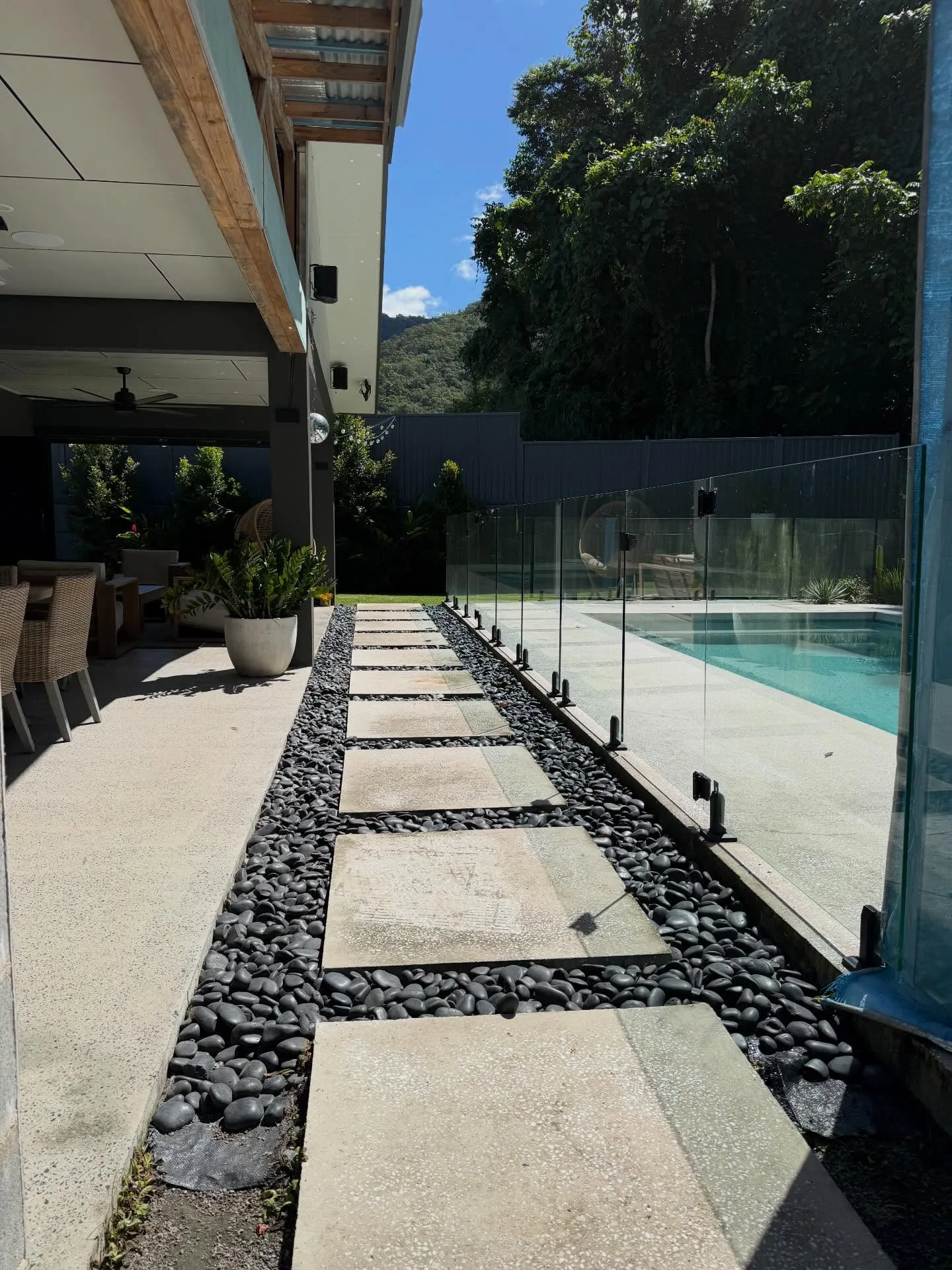
THE SURFACESYOU WALK ONBAREFOOTGET THE MOSTCAREFUL SETTING.
Sandstone, travertine, timber and pavers all fail differently under too much pressure. Each one gets the setting it can take, and the slick green film that makes them dangerous comes off either way.
SLIPPERY IS ASAFETY PROBLEMBEFORE IT IS ANAPPEARANCE ONE.
The green film that grows on a shaded pool surround is not just unsightly. Wet, it has roughly the friction of soap, and it collects exactly where people are walking with wet feet and no shoes. It is the reason this work gets booked before Christmas far more often than it gets booked for looks.
The catch is that these are the softest surfaces on the property. Sandstone pits. Travertine loses its fill. Timber furs up and lifts its grain, and once the grain is raised no amount of later care puts it back. Pavers give up their jointing sand and start to move. Every one of them will be permanently damaged by the pressure a driveway wants.
So the pressure comes down and the chemistry does more of the work. The growth is treated and given time to die properly at the root, then lifted at a setting matched to what is underneath it. It takes longer. It is the only way these surfaces come up clean and stay intact.
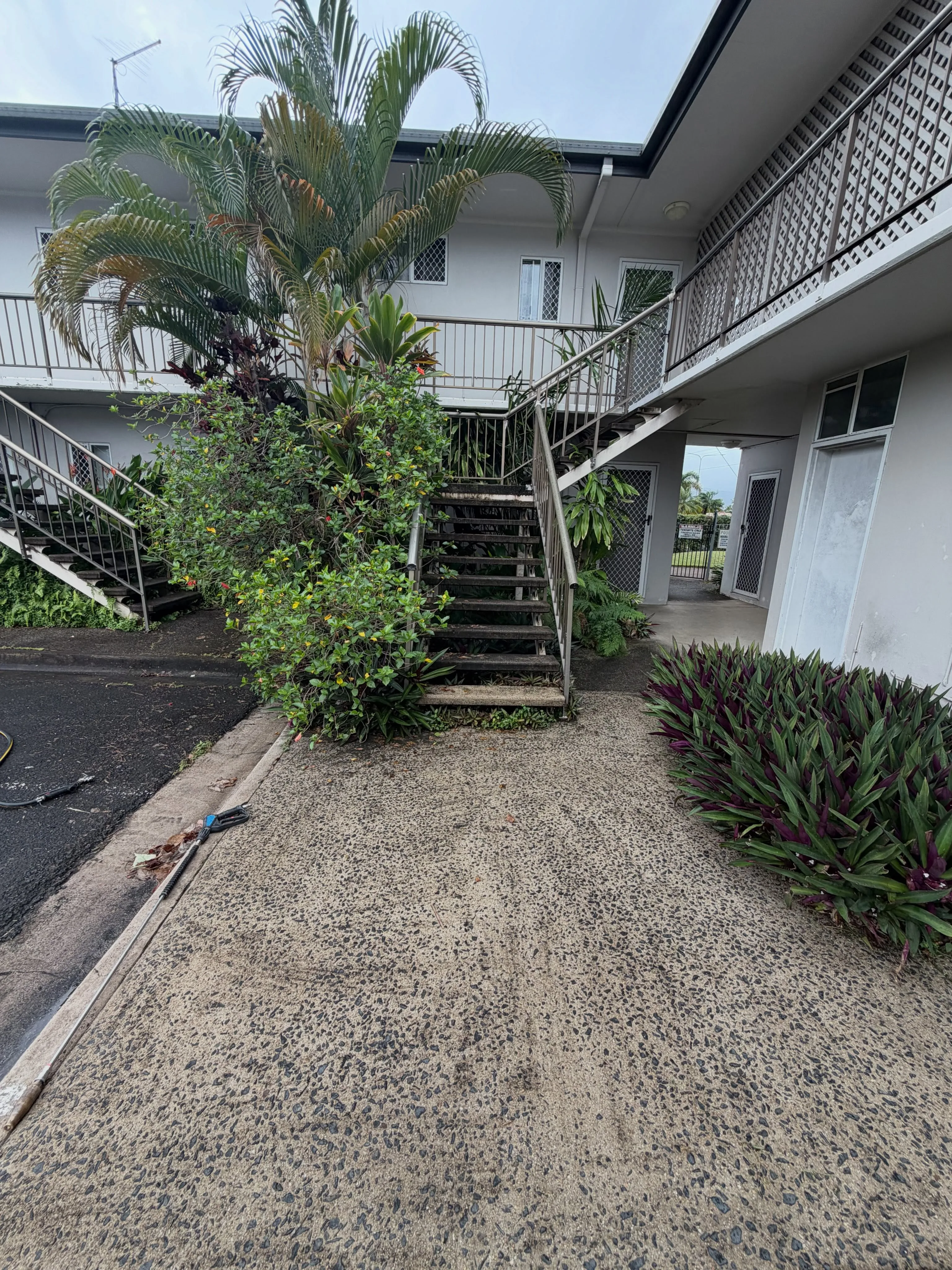
ONE PROPERTY,FOUR DIFFERENTSETTINGS.
A single alfresco area routinely has travertine underfoot, a timber deck off it, rendered piers holding the roof up and a run of pavers to the pool gate. They do not share a setting, and treating them as one surface is how one of them gets ruined.
Each material gets tested in an inconspicuous spot before the main area is committed to. It is a small habit that costs ten minutes and has saved a great many stone patios.
- Sandstone & travertine
- Low pressure, chemistry-led
- Timber decking
- Gentle, with the grain, no lifting
- Pavers
- Dialled back to protect jointing sand
- Tile & concrete
- Stepped up where the surface allows
- Treatment
- Mould and mildew treatment, given dwell time
- Test patch
- Every new surface, before the main area
WHAT WE CLEANOUT HERE.
Pool surrounds & coping
The slick, shaded areas where the algae grows fastest and matters most.
Sandstone & travertine
Soft stone, cleaned at a pressure that leaves the surface where it is.
Timber decks & stairs
Cleaned with the grain, and left ready for oiling or staining if that is the plan.
Pavers & brick paving
Including the moss in the joints, with re-sanding raised where it’s needed.
Alfresco tile & outdoor kitchens
Tiled entertaining areas, splashbacks and the grout between them.
Playgrounds, awnings & shade sails
Soft-fall surfaces, play equipment and awning fabric where it can be safely washed.
WHAT WE WON’TTAKE ON.
Sealing, oiling & staining
We clean and prepare. Applying a finish is separate work, and the surface has to be properly dry first.
Timber repairs
Loose boards, popped nails and rot are photographed and handed to you, not fixed.
Re-laying or re-levelling pavers
A landscaper’s job. We’ll show you where the falls have gone.
Pool water & equipment
The water, the pump and the filter belong to your pool contractor. We work on what surrounds them.
Badly weathered timber
Where a deck is already grey through and lifting, cleaning reveals the condition rather than reversing it.
Guaranteed stain removal
Tannin from leaf litter and rust from furniture feet can be decades old. They lift; they don’t always vanish.
WHAT GETSMOVED, COVEREDOR CHECKED.
Entertainment areas are full of things that do not enjoy being washed. Most of this is a five-minute conversation at quote stage.
Furniture & barbecues
Moved clear before we start. Coordinated with you rather than shifted without asking.
The pool itself
Kept clear of runoff and treatment. If a cover is needed over the water, that gets planned in.
Outdoor power & lighting
Deck lights, external outlets and speakers identified and worked around.
Timber condition
Loose boards, proud nails and soft spots found and photographed before pressure goes anywhere near them.
Jointing sand
On pavers, how much sand is left in the joints decides the setting — and whether re-sanding should follow.
Drainage & fall
Where the water leaves the area, so it isn’t pushed toward a door threshold or a garden bed.
HOW A PATIOCLEAN RUNS.
More surfaces per square metre than any other job we do, so the walk-around carries more weight here.
- 01
Send photos of the area
Photos matter more here than anywhere — the materials are the quote.
- 02
The measure
Straightforward areas are measured remotely. Multi-surface entertaining areas usually earn a site visit.
- 03
The quote
Named surface by surface, so you can see exactly what is and isn’t included.
- 04
Walk-around, test patch & before photos
Each material tested somewhere out of sight before the main area is committed to.
- 05
Treat, dwell, clean
Growth treated and given time, then lifted at the setting that surface takes. Surrounds rinsed.
- 06
After photos, then the invoice
And a note of anything we found underneath that you’ll want to deal with.
THE THINGSPEOPLE ACTUALLYASK.
Still not covered? Ring Blake on 0495 090 010. Enquiries are answered the same day.
Will pressure cleaning damage my sandstone or travertine?
It can, at the wrong setting — soft stone pits and travertine loses its fill. That is why these surfaces are cleaned chemistry-first at low pressure, and why we test an out-of-sight patch before committing to the main area.
Can you clean a timber deck?
Yes, gently and with the grain. Timber is the least forgiving surface out there: too much pressure raises the grain permanently and leaves a furry, splintery finish. Done properly, a deck comes up clean and is ready for oil once it has dried out.
Do you clean around pools?
Regularly — pool surrounds are one of the most common jobs on this list, because that is where the slippery growth ends up. The water itself and the pool equipment stay with your pool contractor.
Will the moss come back?
In this climate, eventually. Treating the growth at the root rather than blasting it off buys you considerably longer, and generally you’ll get a good six months of it looking like new before it starts to return.
Can you oil or seal the deck afterwards?
That is separate work and needs the timber fully dry, so it is a second visit rather than the same afternoon. Raise it at quote stage and the timing gets planned properly.
OFTEN BOOKEDAT THE SAME TIME.
FOUR TAPS.ONE NUMBER.NO PHONE CALL.
Tap what you’ve got and the estimate builds as you go. Blake measures the real thing before it becomes a fixed price, and every enquiry is answered the same day.