HIGH PRESSUREWRECKS ROOFS.SO WE DON’TUSE IT.
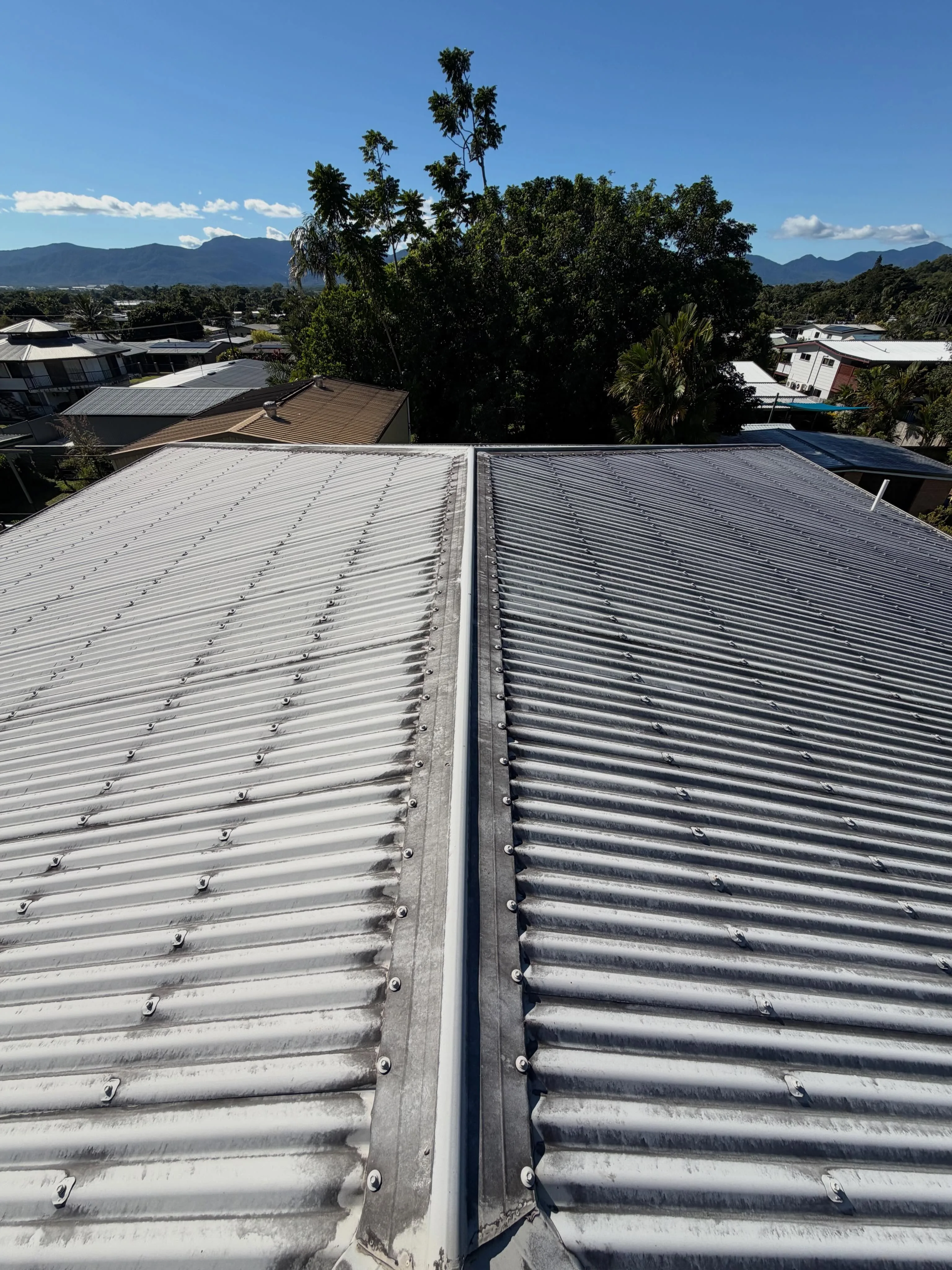
A dirty roof in this climate is a chemistry problem, not a pressure problem. We treat the growth at the root at low pressure, so the coating that protects the roof is still there once the mould is gone.
THE BLACK STREAKINGISN’T DIRT.
What runs down a Far North Queensland roof in dark vertical stripes is alive. Algae, lichen and mould that have taken hold in a climate purpose-built for them — wet season humidity, warm nights, and a surface that stays damp long after the rain has stopped. It is not dust sitting on top of your roof. It has a grip on it.
That single distinction decides the entire job. Dirt comes off with force. A colony comes back from force, and comes back faster, because force is what gives it somewhere better to live. High pressure scores the surface it hits, and a scored roof holds moisture in every new groove. You get a clean roof for one season and a quicker regrowth for the next ten.
So the roof gets a mould and mildew treatment applied at low pressure, and it gets the dwell time it needs to work. The product does the job. The surface is left the way the manufacturer made it.
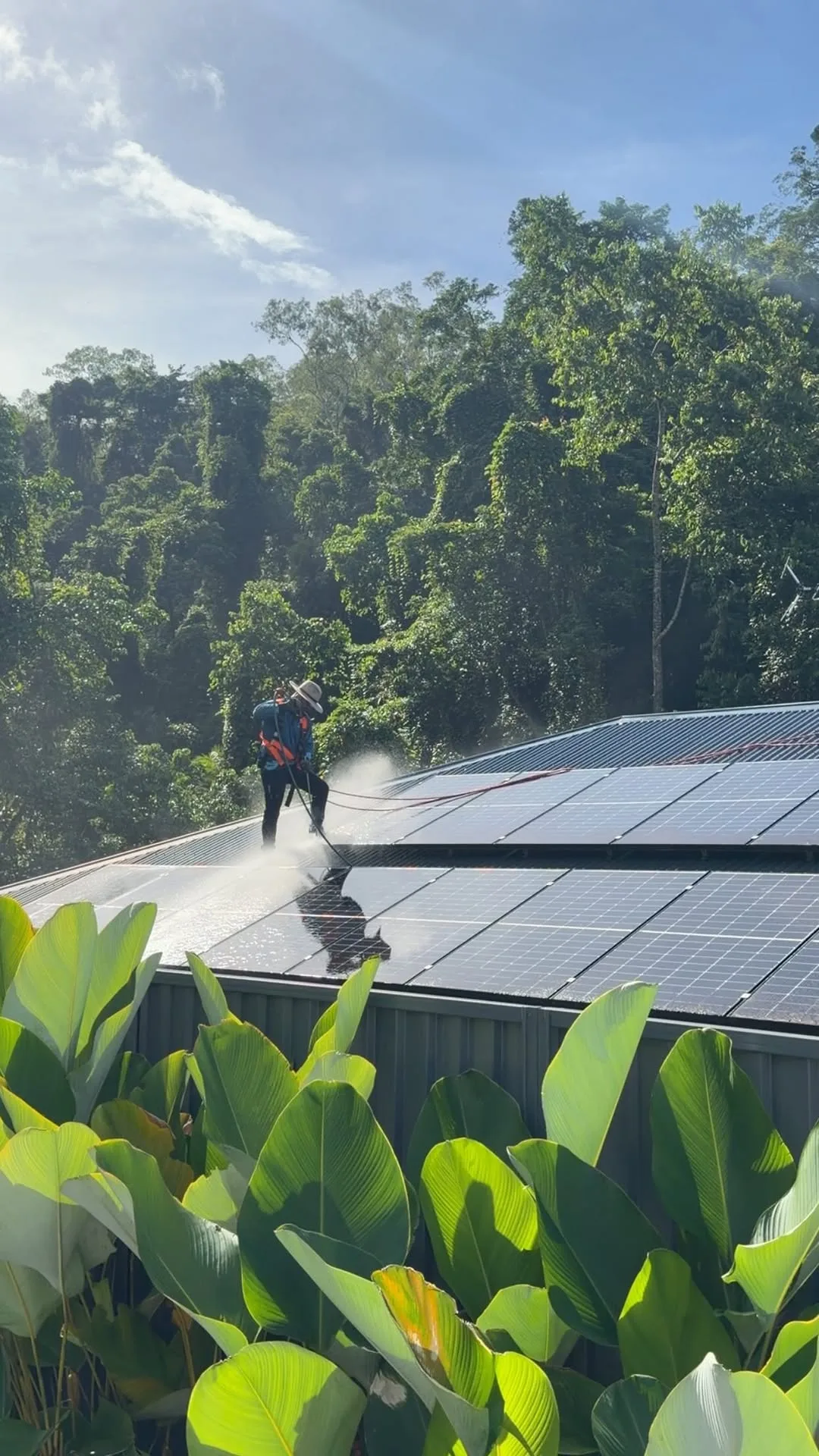
“It depends on the surface we’re treating. A roof gets a low-pressure clean — a soft wash. A driveway gets high pressure plus chemical. Solar panels get no chemicals at all: pure de-ionised water only.”
PRESSURE DIALLEDTO THE SURFACE.
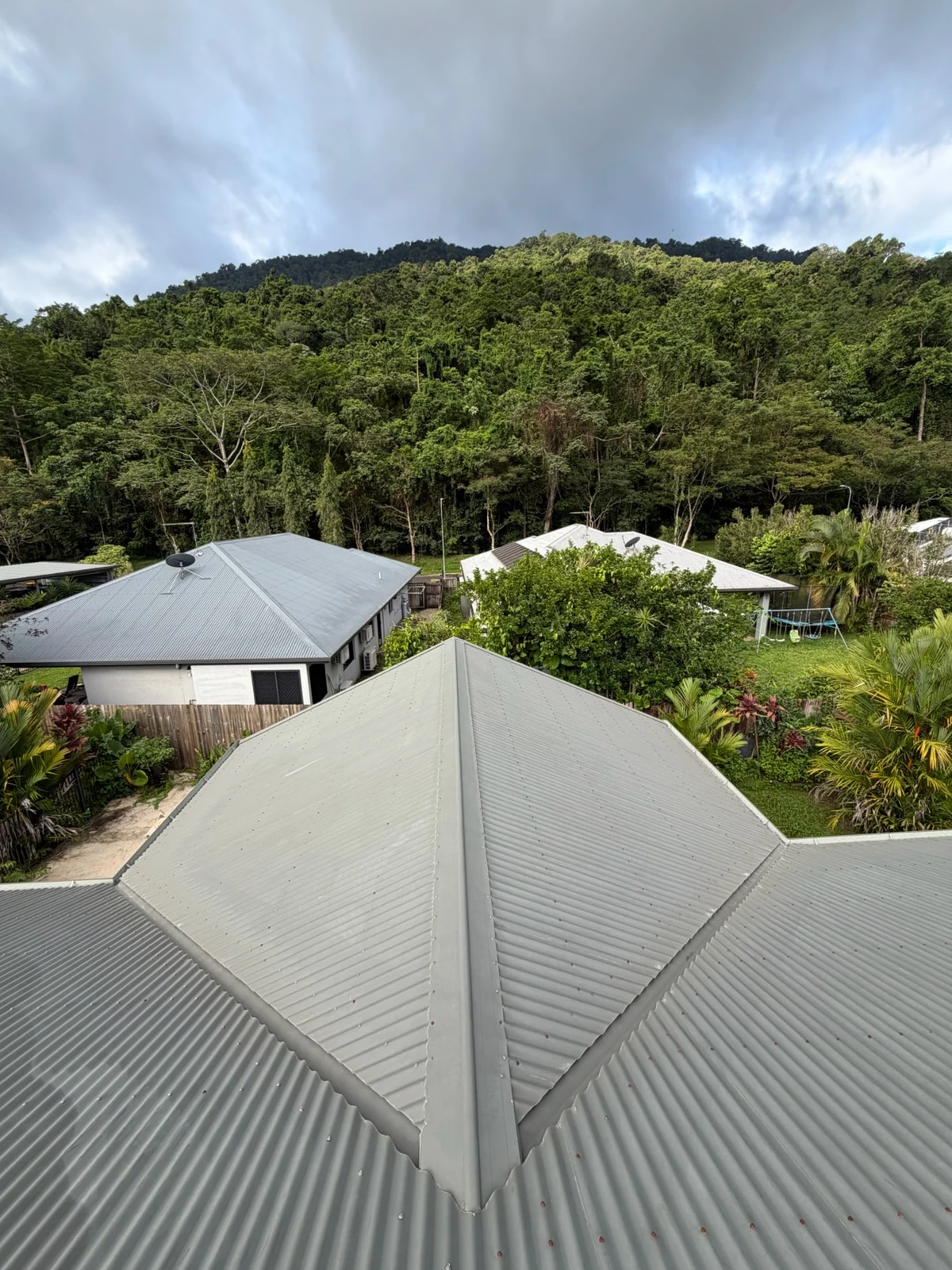
One machine, rated to 4,200 PSI, and on a roof it never goes near that. The rating is headroom, not a setting. What matters is the number it is turned down to for the material in front of it — Colorbond and tile at the low end, flat concrete at the top, and a judgement call for everything between.
Run the top end on a roof and you score it. A scored roof is a better home for mould than it was before you cleaned it, which means the wash that looked most impressive on the day is the one that costs you most over the life of the roof. That is the whole technical argument, and it is the honest reason this costs more than a trailer with a gurney on the back.
- Equipment
- One machine, rated to 4,200 PSI
- On roofs
- Low pressure — soft wash
- Treatment
- Mould and mildew treatment, given dwell time
- Surfaces
- Colorbond, metal, concrete and terracotta tile
- Height ceiling
- Up to three storeys
- Insurance
- $20M public liability
WHAT THE ROOFCLEAN COVERS.
Colorbond & metal roofing
The majority of roofs in this region. Treated at the low end of the range, every time.
Concrete & terracotta tile
Porous surfaces, where the growth is in the material rather than on it.
Valleys, ridges & flashings
Where debris collects and the growth takes hold before anywhere else on the roof.
Fascia, barge boards & eaves
Cleaned in the same pass, because that is where the streaking runs down to.
Carports, awnings & patio roofs
Lower-level sheeting, same treatment, usually the same visit.
AND WHAT ITHONESTLY DOESN’T.
Roof painting
We don’t paint roofs. We’re a cleaning company, and we’d rather say so than quote it.
Screw & hex-head replacement
Not qualified for it. That answer doesn’t change if you ask nicely.
Repairs & restoration
Including storm and insurance repair work. We will happily do the clean where a repaint is going through insurance — we just aren’t the ones doing the repair.
Bird & pigeon proofing
Needs a qualified installer. Same for solar guards and nest exclusion under panels.
Roof inspections
We can look, and we’ll show you everything we saw. We can’t advise on it — see “Will my roof need repairs afterwards?” in the FAQ below.
Anything above three storeys
A liability ceiling rather than a capability one. No drone work either, so no hotels.
A short list of things we don’t do is worth more to you than a long list of things we claim to. If a job needs a trade we don’t hold, you’ll hear it on the phone rather than on the day.
WHAT GETS LOOKED ATBEFORE THE MACHINECOMES OFF THE TRUCK.
Every roof is its own set of conditions. This is what gets checked on the walk-around, and what is worth mentioning when you first make contact.
Gutters & downpipes
Everything lifted off a roof has to go somewhere. Blocked gutters get raised before the wash, not after — often it makes sense to do both in one visit.
Read moreSolar panels
Panels change the sequence and the chemistry on a roof. Mention them when you enquire and they get worked into the plan.
Read moreRainwater tanks
If the roof feeds a tank, downpipes are isolated before anything is applied and reconnected once the rinse is finished.
Gardens & planting
Beds and turf under the runoff line are wet down before the treatment goes on and rinsed through afterwards.
Roof condition
Cracked tiles, lifted sheets and rust breaking through are photographed on the way in, so the record exists before anyone has touched anything.
Access & water
Somewhere to put a truck, and a working outdoor tap at the property.
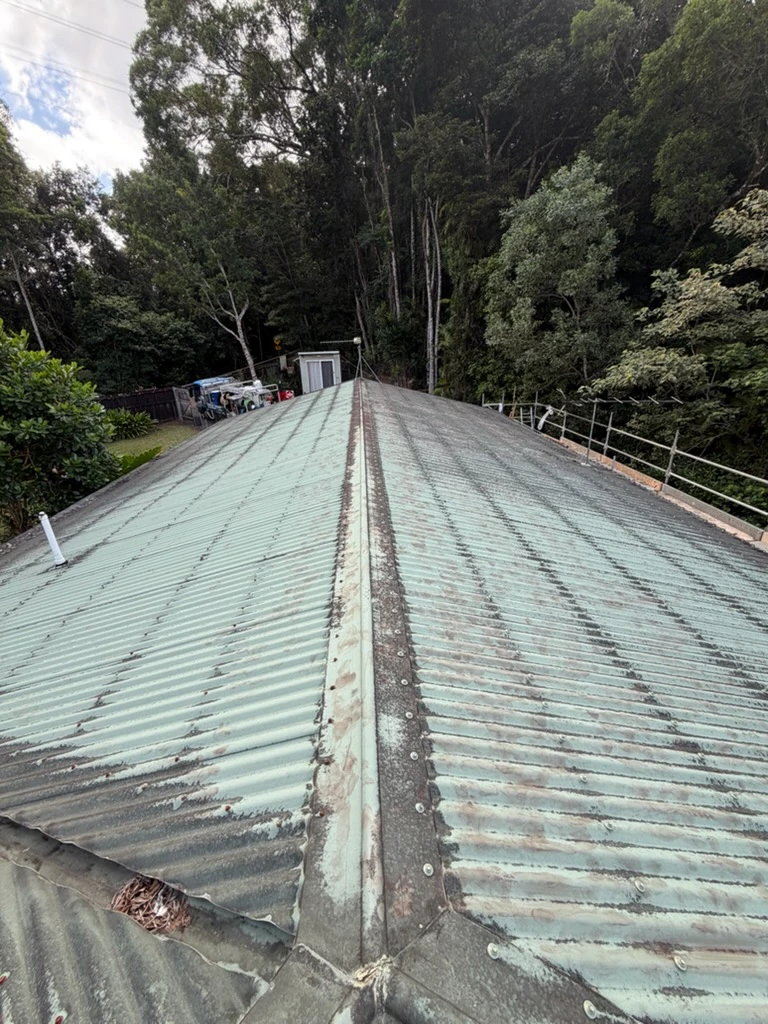
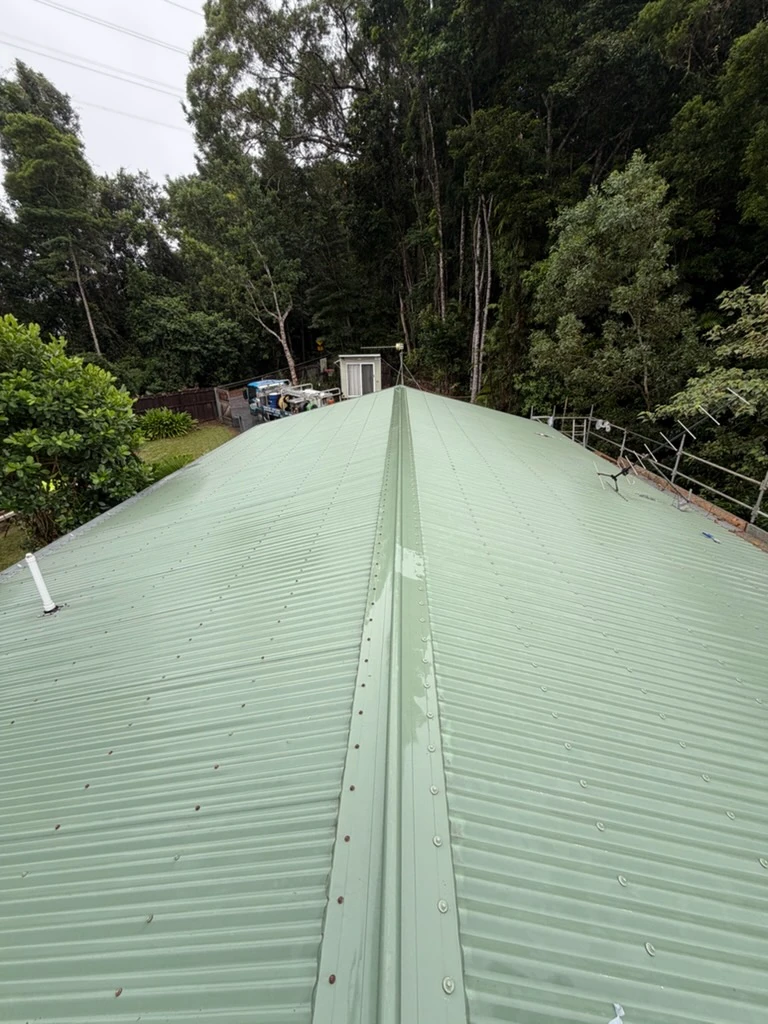
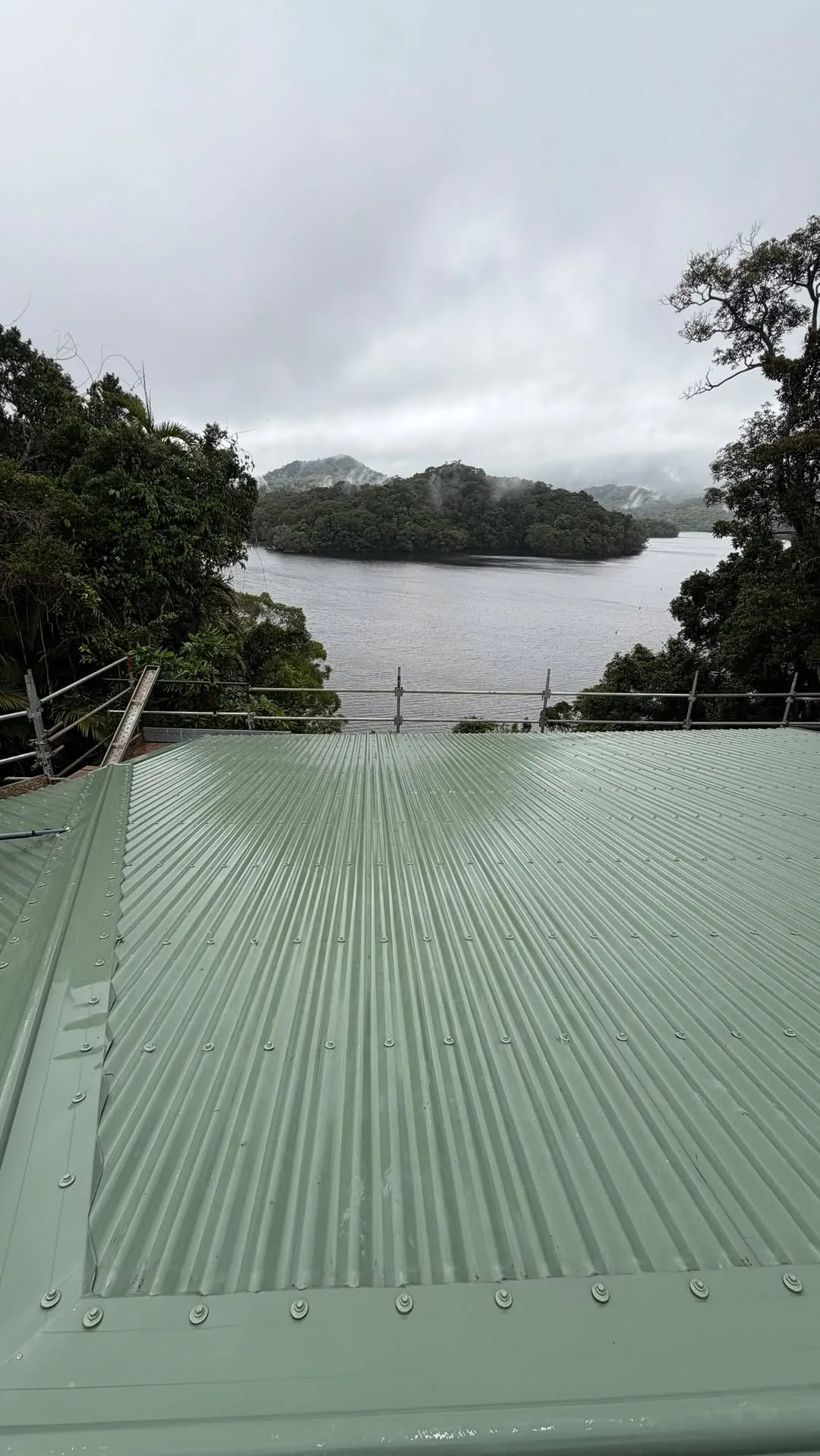
A tree-shaded roof north of Cairns. One soft wash, no pressure taken to the sheeting.
HOW A ROOFCLEAN RUNS.
Six steps, and two of them are photographs. The record matters more on a roof than anywhere else, because it is the one surface you can’t check for yourself.
- 01
Tell us what you’ve got
Address, roof type, rough age, and a photo if you have one. Photos genuinely speed this up.
- 02
The measure
Around six in ten residential roofs are measured remotely on Queensland Globe — satellite imagery, drawn around your actual roofline, priced off real square metreage. Commercial, prestige and body corporate work gets a site visit. Blake decides which after he has called you.
- 03
The quote
Scope, inclusions and what has been assumed about the roof’s condition, in writing, before a date is set.
- 04
Site walk & before photos
Every job opens with a walk-around and a photo set. It is the record for both of us.
- 05
The wash
Treatment applied and given its dwell time, then rinsed at low pressure. Surrounds washed down, gear packed up.
- 06
After photos, then the invoice
You are told the job is done and you see the photos. The invoice is raised after that — never before.
THE THINGSPEOPLE ACTUALLYASK.
Still not covered? Ring Blake on 0495 090 010. Enquiries are answered the same day.
Do you treat the surface with a product?
Yes, we use a mould and mildew treatment. It helps combat mould at the root and prolongs the life of your roof.
What PSI do you use on a roof?
A roof gets a low-pressure clean — a soft wash. The machine is rated to 4,200 PSI, but that rating is headroom for flat concrete, not a setting we take to your roof sheeting. High pressure scores the surface, and a scored surface breeds mould more easily than it did before.
How long does it last?
It varies with your location and environmental factors. A high mould build-up area won’t hold as long, but generally you’ll get a good six months of it looking like new.
Will my roof need repairs afterwards?
That depends on the current condition of your roof, and we’ll be able to tell you once we’ve completed the job. We’ll do a site check while we’re up there, but we are not certified to provide professional advice, so what we’ll give you is images and photos to pass on to a contractor.
Do you paint roofs, or replace roof screws?
No to both. We’re a pressure cleaning company, and screw and hex-head replacement isn’t something we’re qualified for. We’d rather tell you that now than find a way to charge you for it.
What happens to my garden while you’re working?
Beds and turf under the runoff line are wet down before the treatment goes on, then rinsed through once the roof is done. Tell us about anything delicate, any pets, and whether the roof feeds a rainwater tank when you enquire, and it gets planned around.
OFTEN BOOKEDAT THE SAME TIME.
FOUR TAPS.ONE NUMBER.NO PHONE CALL.
Tap what you’ve got and the estimate builds as you go. Blake measures the real thing before it becomes a fixed price, and every enquiry is answered the same day.