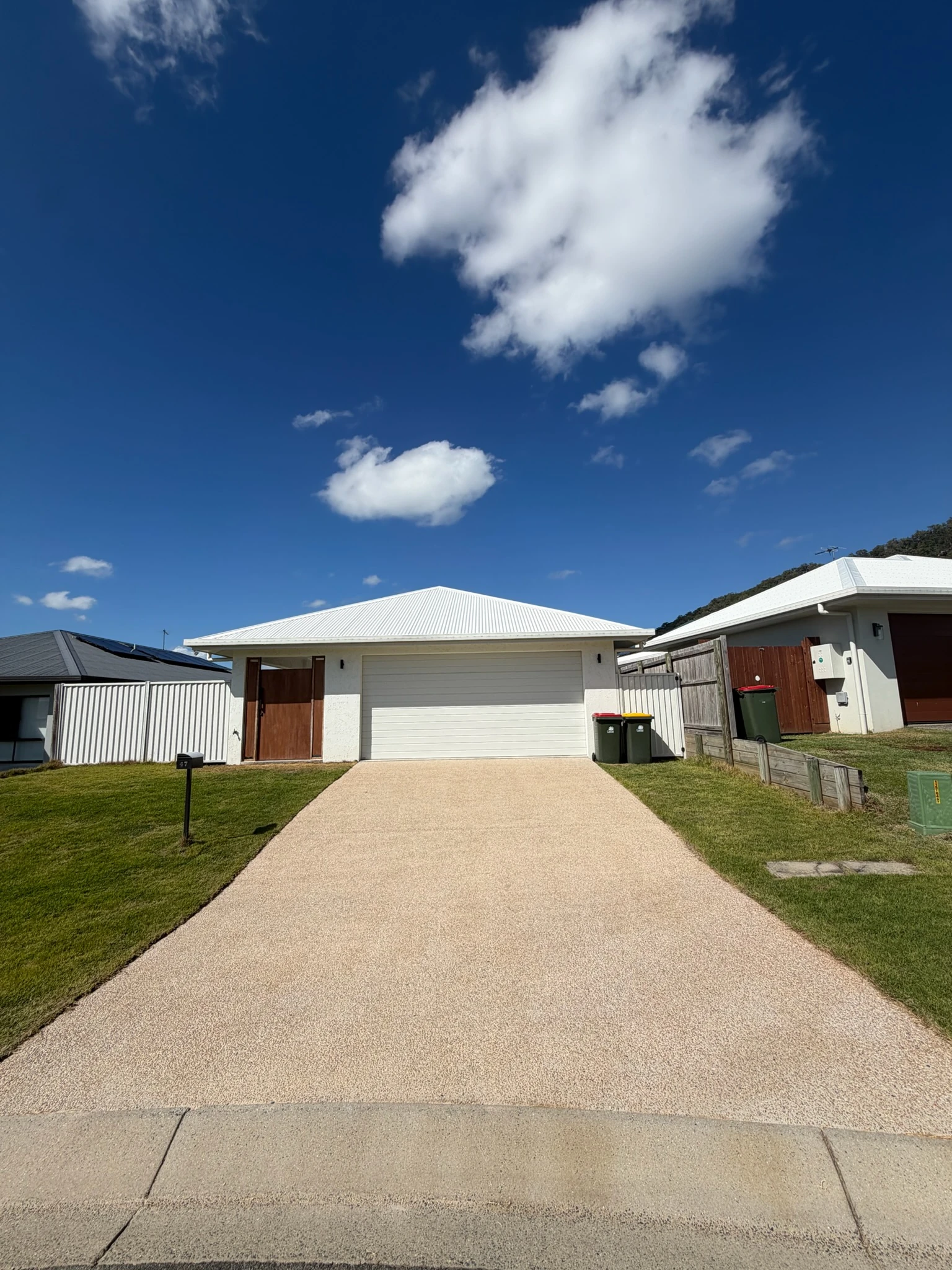
THIS IS THE ONESURFACE THATWANTS THEFULL 4,200.
Flat concrete is the exception to everything else on this site. Here the pressure goes up, the rotary head goes on, and the years of oil, moss and ground-in grime come off in one even pass.
WHY YOURDRIVEWAY LOOKSSTRIPED AFTERSOMEONE ELSECLEANS IT.
A pressure wand puts an enormous amount of energy through a very small point. Wave it across a slab by hand and every pass overlaps the last one unevenly — some of the concrete gets hit twice, some once, some barely at all. What you are left with is the zebra striping you can see from the street, and once it is in the concrete the only way out is to clean the whole slab again, properly.
A rotary surface cleaner solves it mechanically. Two jets spinning inside a shrouded head cover the full width at a constant speed and a constant distance, so every square centimetre gets exactly the same treatment. The finish is even because the machine cannot help but be even.
The other half of the job is chemical, and it happens before the water does. Oil, grease and tyre rubber do not respond to pressure alone — they get pre-treated and given time to break down, so the pressure is finishing the job rather than trying to do all of it. That is also what stops the concrete being etched by someone leaning on the trigger to make up the difference.
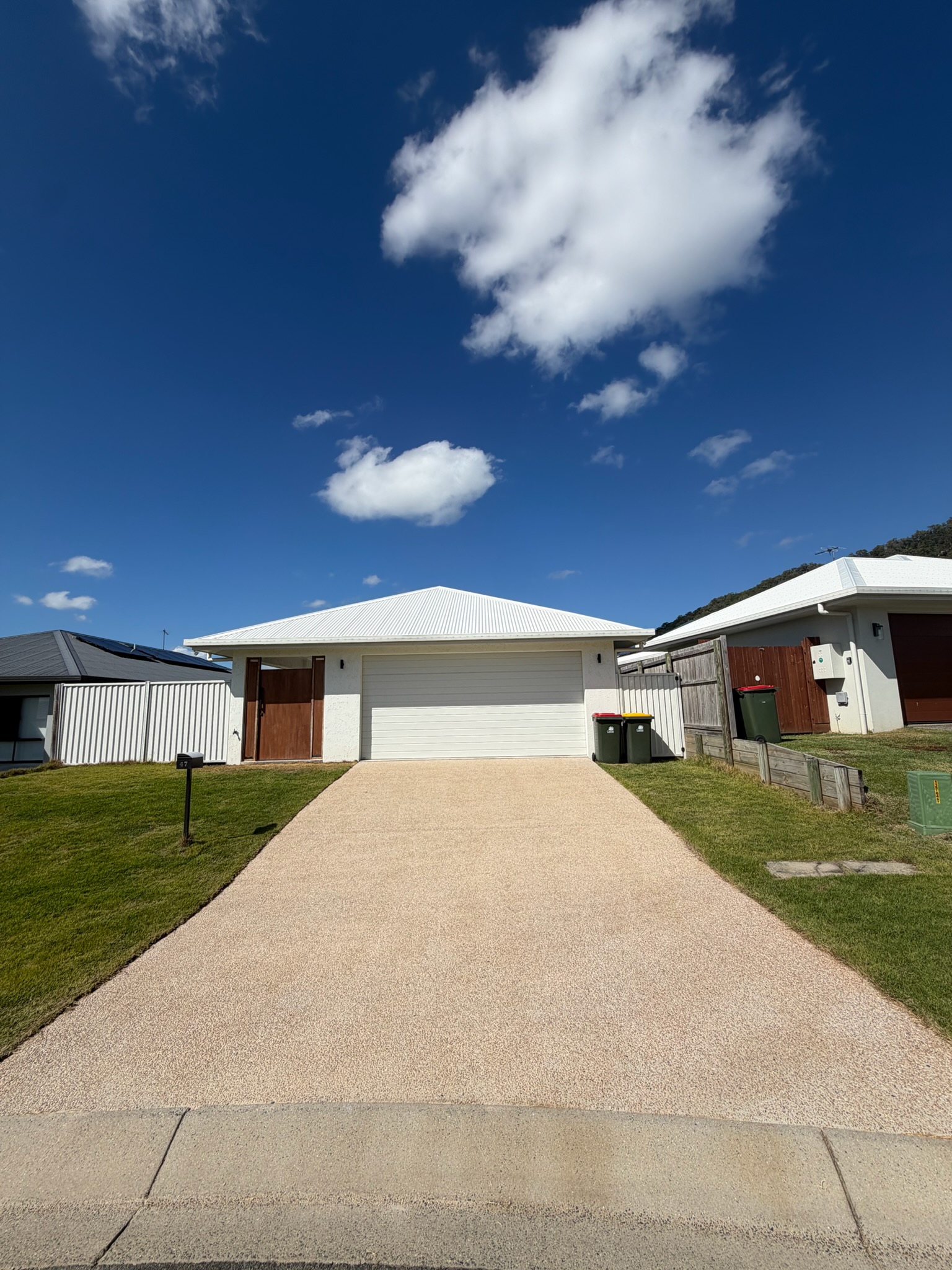
PRE-TREAT.ROTARY PASS.RINSE THEEDGES BY HAND.
The slab is pre-treated for what is actually on it — degreaser where there is oil, mould and mildew treatment where the surface has gone green and slick, and an anti-rust treatment where a downpipe or a steel planter has been bleeding into the concrete for years.
Then the rotary head does the field, and the edges, expansion joints and the awkward metre against the garage door get finished by hand with the wand, because a round head cannot get into a square corner. Skipping that last part is how a driveway ends up clean in the middle and filthy at the margins.
- Working pressure
- Up to 4,200 PSI on sound concrete
- Head
- Commercial rotary surface cleaner
- Pre-treatment
- Degreaser, mould treatment, anti-rust as required
- Finish
- Even across the slab — no zebra striping
- Edges
- Hand-finished with the wand
- After
- Sealing available as a separate service
WHAT WE TAKETHE PRESSURE TO.
Concrete driveways & hardstand
Plain, coloured and stencilled concrete in sound condition.
Exposed aggregate
Cleaned at a pressure the exposed stone can take, which is not the same as plain concrete.
Paths, entries & footpaths
Including the council footpath across your frontage, while we’re set up.
Garage & shed slabs
Oil-stained internal slabs, degreased and cleaned.
Pavers & brick paving
Pressure dialled back for the jointing sand, and re-sanding raised where it’s needed.
WHERE THEPRESSURE COMESBACK DOWN.
Anything vertical
Walls, cladding and render are a soft-wash job. Different surface, different rule.
Where it lives insteadTimber decking
Timber gets a far gentler approach, or it furs up and splinters.
Where it lives insteadSandstone & travertine
Soft stone pits under high pressure. Handled on the patio scope instead.
Where it lives insteadCracked or spalling concrete
Where the surface is already failing, pressure will take more of it off. You’ll be told before we start.
Concrete repair or resurfacing
We clean it. Fixing it is a concreter’s job.
Removing every stain, every time
Deep oil, rust and tannin that have been sitting for years will lift substantially and may not vanish. We’d rather set that expectation now.
Nobody can promise to bring a slab back to the colour it was poured. What we can tell you, once we’ve seen photos, is roughly how far yours will come.
WHAT GETSPLANNED AROUNDA DRIVEWAY.
High pressure moves a lot of water and it moves it fast. Where that water goes is part of the job, not an afterthought.
Where the runoff goes
Fall of the slab, stormwater inlets and the neighbour’s boundary all worked out before the machine starts.
Garden beds & turf
Beds bordering the slab are wet down first and rinsed after, so nothing sits on them concentrated.
Vehicles
Cars, boats and trailers off the slab before we arrive. It’s the one thing we genuinely need from you.
Doors, windows & garage seals
Anything at ground level that a rotary head throws water at gets checked and closed.
Existing damage
Cracks, previous patches and spalling photographed on the way in, because pressure finds every weak spot.
Sealing
If you want the slab sealed, it has to be clean and properly dry first. Worth raising at quote stage so the visits line up.
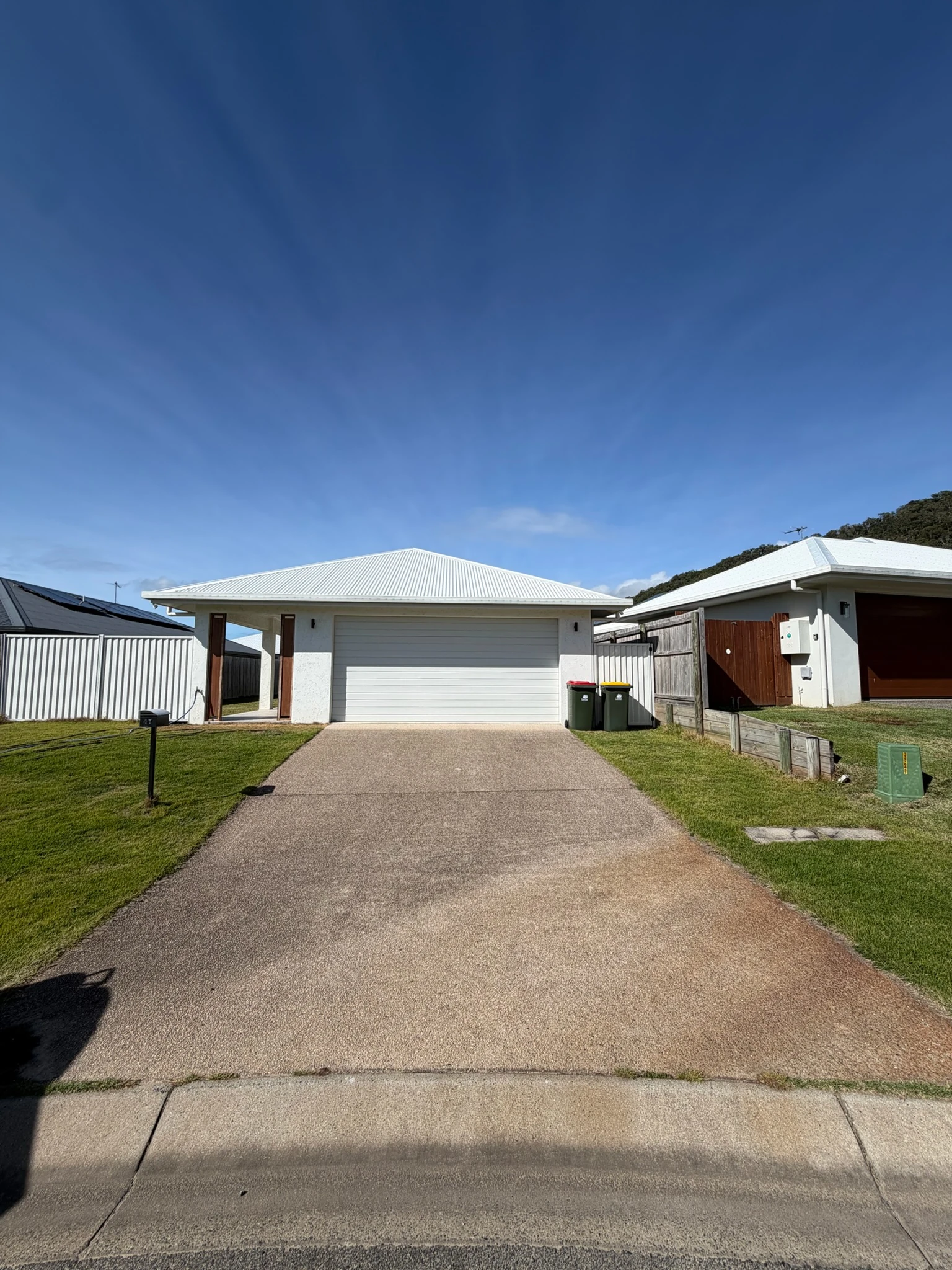
A Cairns driveway, rotary cleaned in a single pass. Even across the slab, edges finished by hand.
HOW A DRIVEWAYCLEAN RUNS.
The quickest job on this site to quote, and the easiest to see the value of.
- 01
Send a photo
One photo of the driveway tells us more than any description. Add the address and we can measure it from there.
- 02
The measure
Driveways and paths are measured off satellite imagery. You don’t need to know your own square metreage — nobody does.
- 03
The quote
In writing, with the areas named and any staining we can already see called out.
- 04
Before photos & pre-treatment
Slab photographed, then treated for what is actually on it, and given time to work.
- 05
Rotary pass & hand finish
Even coverage across the field, edges and joints finished by hand, surrounds rinsed down.
- 06
After photos, then the invoice
Same rule as every job — you see it and you’re happy before it is billed.
THE THINGSPEOPLE ACTUALLYASK.
Still not covered? Ring Blake on 0495 090 010. Enquiries are answered the same day.
Will it get the oil stains out?
Most of them, most of the time. Fresh oil comes up well with a degreaser and dwell time. Oil that has been soaking into porous concrete for a decade will lighten significantly rather than disappear, and we would rather say that up front than surprise you on the day.
Why does my driveway look striped when someone else cleans it?
That is zebra striping, and it comes from cleaning a large flat area by hand. We use a rotary surface cleaner for the field so the coverage is mechanically even, and finish the edges by hand where the round head can’t reach.
Can you damage the concrete?
Sound concrete handles high pressure comfortably. Concrete that is already spalling, cracked or has a failing surface coating is a different conversation, and one we will have with you before starting rather than after.
Do you clean pavers and exposed aggregate the same way?
Same machine, different setting. Pavers get less pressure so the jointing sand survives, and exposed aggregate gets dialled to what the exposed stone can take. It is the same principle as everything else here — the surface sets the number.
Do you seal driveways afterwards?
Sealing is available as a separate piece of work. The slab has to be clean and fully dry first, so it is a second visit — mention it at quote stage and the two get planned together.
OFTEN BOOKEDAT THE SAME TIME.
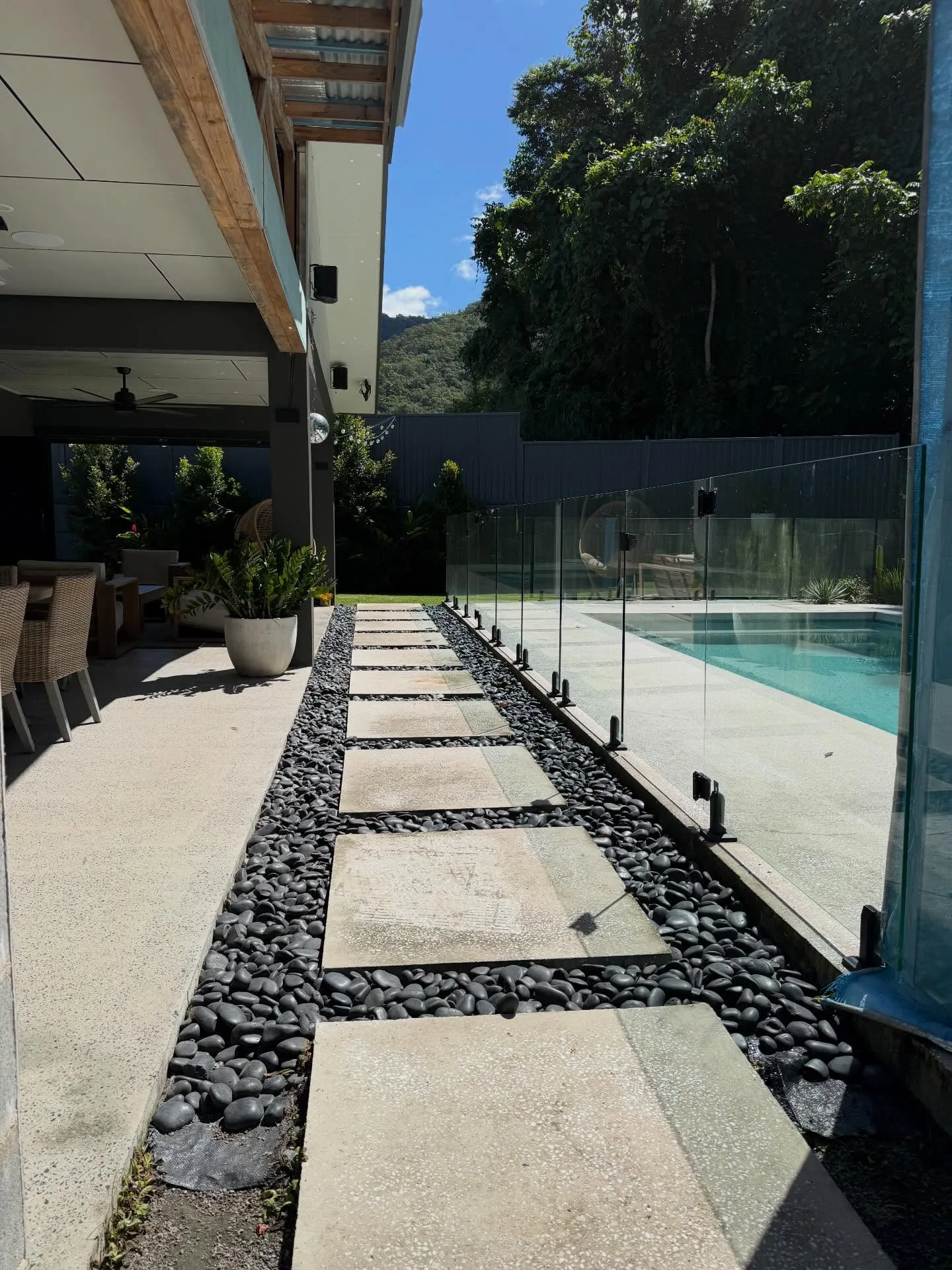
FOUR TAPS.ONE NUMBER.NO PHONE CALL.
Tap what you’ve got and the estimate builds as you go. Blake measures the real thing before it becomes a fixed price, and every enquiry is answered the same day.