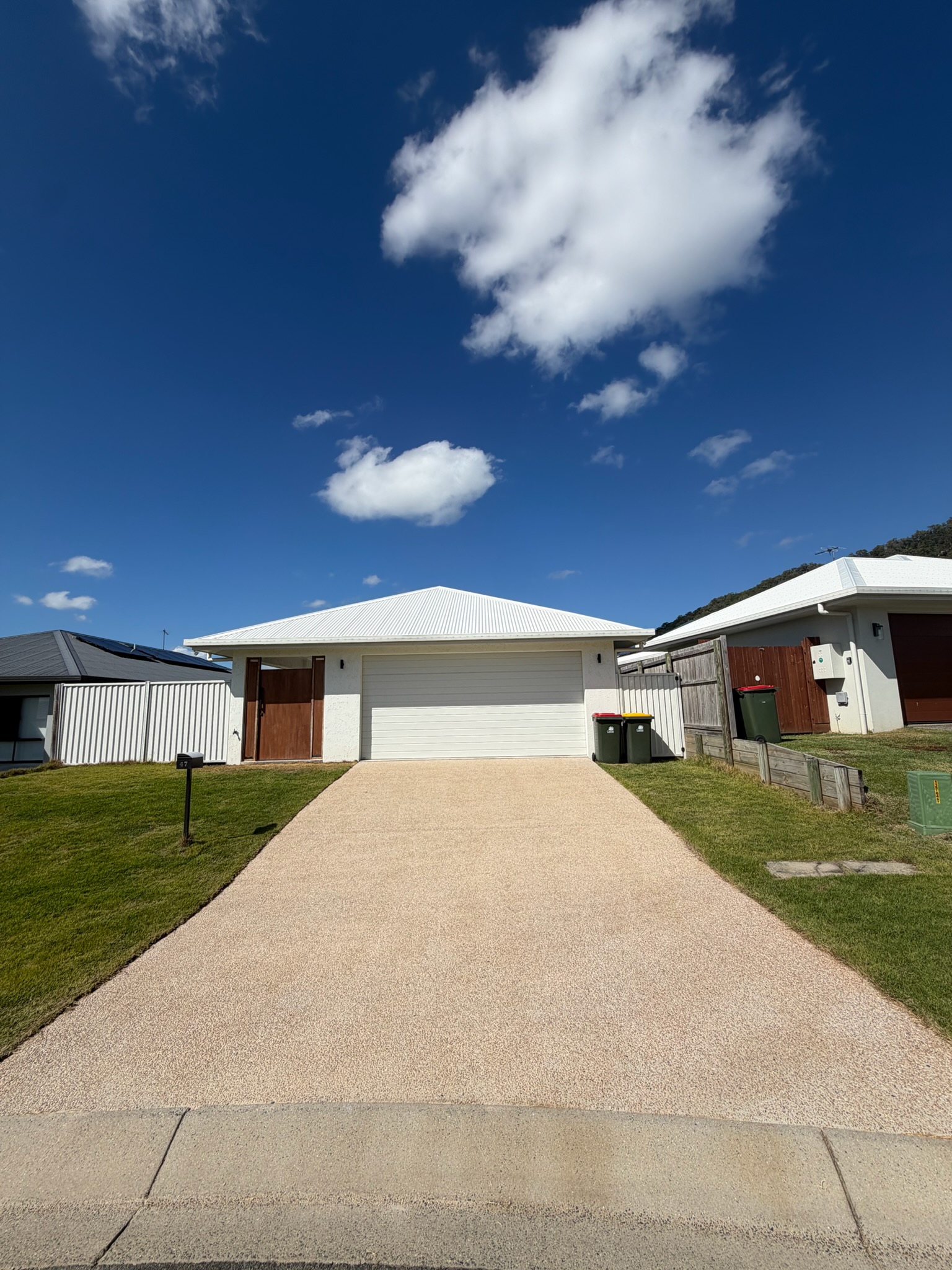
UNDER 300 PSI.THE DIRT MOVES.THE PAINTDOESN’T.
Walls get washed under low pressure with surfactants that cling long enough to do the work. The dirt comes off. The paint, the render and the water-tightness of your cladding all stay where they are.
THE DAMAGE YOUCAN’T SEE FORANOTHER TWO YEARS.
A wall is not a slab. Behind the weatherboard, the render or the sheeting there is a cavity, and that cavity is designed to stay dry. High pressure aimed at a horizontal join, a window reveal or a weep hole will put water on the wrong side of the cladding, and nothing about that shows up on the day. It shows up as a stain on an internal wall, swollen board ends, or paint lifting in sheets two summers later.
It is the single most common way a cheap house wash turns expensive, and it is entirely avoidable. Under about 300 PSI, water cannot force a join. The cleaning is done by chemistry and dwell time instead of by force — surfactants formulated to cling to a vertical surface long enough to break down the tropical mould, coastal salt and insect residue that a rinse alone would just move around.
Then it gets rinsed off with fresh water, top down, and the house is finished the same day. Weatherboard, rendered block, brick, fibro sheeting, eaves, soffits, window frames and gutters on the outside face — all of it under the same rule.
“Using high pressure on those materials scores the surface, which creates an environment where mould and mildew breed more easily. Soft washing eliminates the growth without damaging the product.”
UNDER 300 PSI.THE PRODUCTDOES THE WORK.
Soft washing is a chemistry job with a rinse attached. The mould and mildew treatment is applied to the wall, given time to break the growth down at the root, and then washed away. Force is not the active ingredient — dwell time is.
Two different surfactants earn their place in that mix. One is a sticky, vertical-cling type, because a product that runs straight off a wall has no time to work on it. The other is an odour-reducing type, which matters more than it sounds when the work is happening a metre from the window of a house someone is living in.
- Working pressure
- Under 300 PSI on cladding
- Treatment
- Mould and mildew treatment
- Surfactants
- Vertical-cling, plus odour-reducing
- Rinse
- Fresh water, top down
- Reach
- Up to three storeys from the ground
- Typical hold
- Around six months in this climate
WHAT THE HOUSEWASH COVERS.
Weatherboard & timber cladding
Including the older Queenslanders, where the paint is often the oldest thing on the property.
Rendered & painted masonry
Render, bagged brick and painted block, cleaned without stripping the finish off them.
Face brick & fibro sheeting
Porous surfaces that hold growth in the material rather than on the face of it.
Eaves, soffits & fascia
Where the cobwebs, wasp nests and mud dauber activity actually live.
Window frames, sills & screens
Frames and screens washed down with the wall. Glass itself is a separate pure-water job.
See the pageGutter exteriors & downpipes
The outside face, cleaned in the same pass. Clearing the inside is its own service.
See the pageWHERE A HOUSEWASH ISN’TTHE ANSWER.
The roof
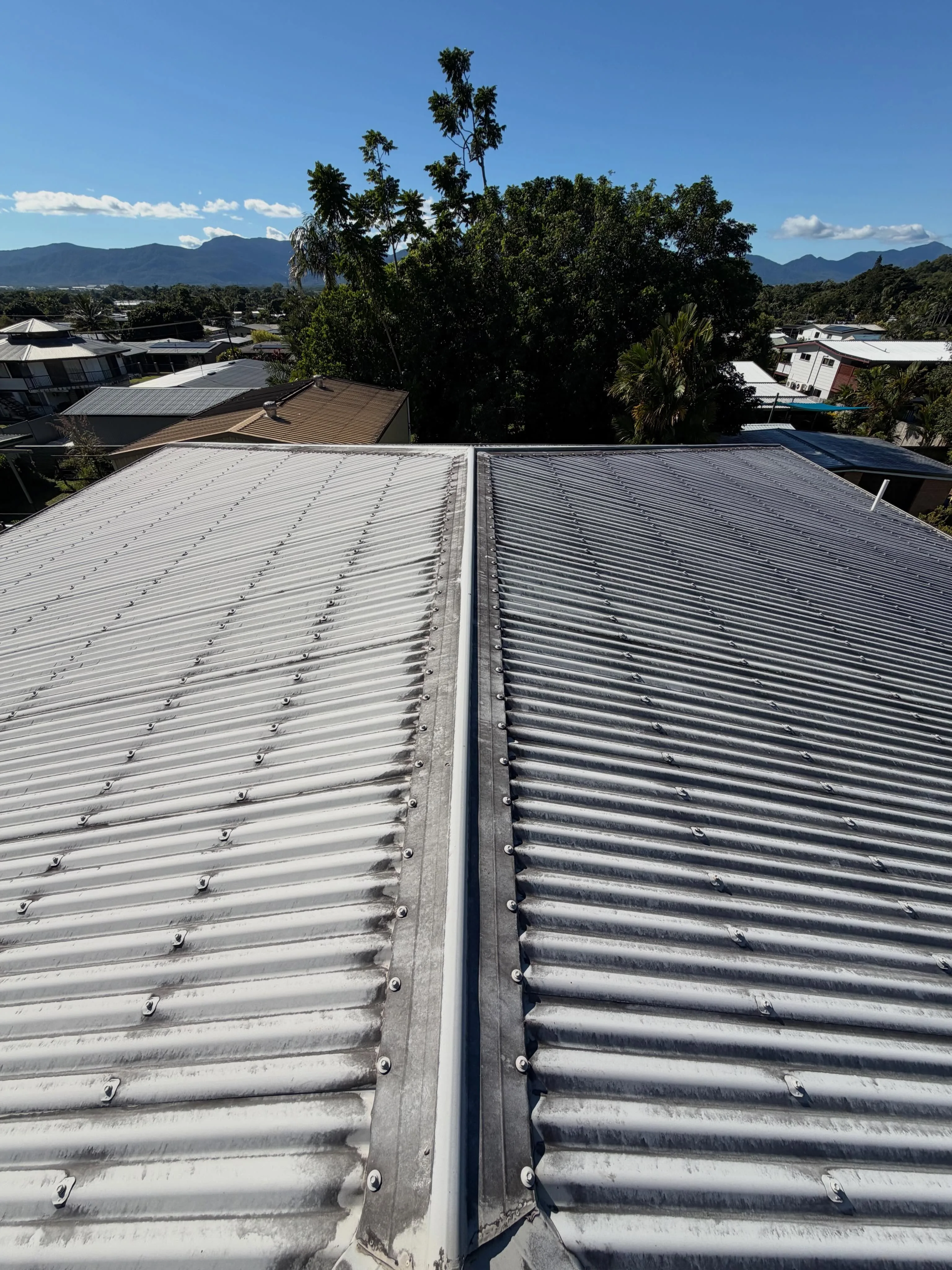
Roofs are their own scope, their own chemistry and their own sequence — usually done first, so nothing lands on clean walls.
Where it lives insteadInterior cleaning
We’re an exterior company. Everything we do stops at the outside face of the building.
Painting & repairs
We’ll clean it beautifully and hand it to your painter. We won’t paint it.
Where it lives insteadFailing or flaking substrates
Where paint is already lifting or render is blown, washing will find that failure rather than fix it. You’ll be told before we start, not after.
Anything above three storeys
Three storeys is the liability ceiling. No drone work, and no hotel towers.
Emergency call-outs
We’re not an emergency service. Booked work, done properly, on an agreed day.
WHAT GETS CHECKEDBEFORE THE FIRSTWALL GETS WET.
Most of a good house wash happens before any water moves. This is the walk-around, and the short list of things worth telling us when you book.
Windows & doors
Every opening near the work area gets closed, and anything that doesn’t seal properly gets flagged to you before we start on that elevation.
Power points & light fittings
External outlets, sensors and fittings are identified and worked around. This is the detail cheap operators skip.
Gardens & pot plants
Beds against the wall are wet down first and rinsed after. Anything precious in a pot is better moved, and we’ll tell you which.
Outdoor furniture & vehicles
Furniture, barbecues and cars near the elevation get moved clear — coordinated with you rather than assumed.
Paint condition
Chalking, flaking and previous patch repairs change what a wash can reasonably achieve. Photographed on the way in.
Neighbours & shared walls
On a tight block, the fence line and the neighbour’s washing are part of the plan whether anyone mentions them or not.
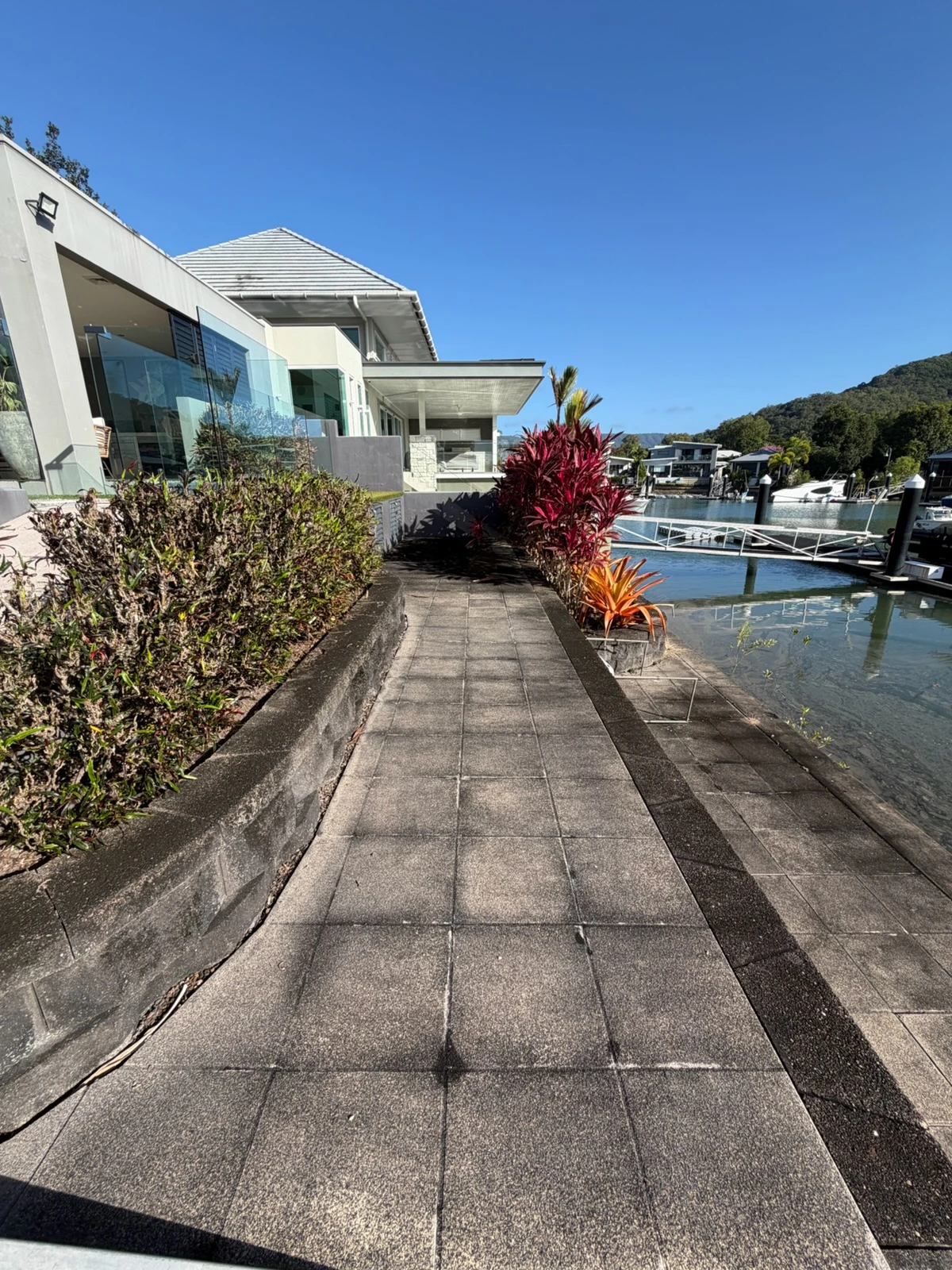
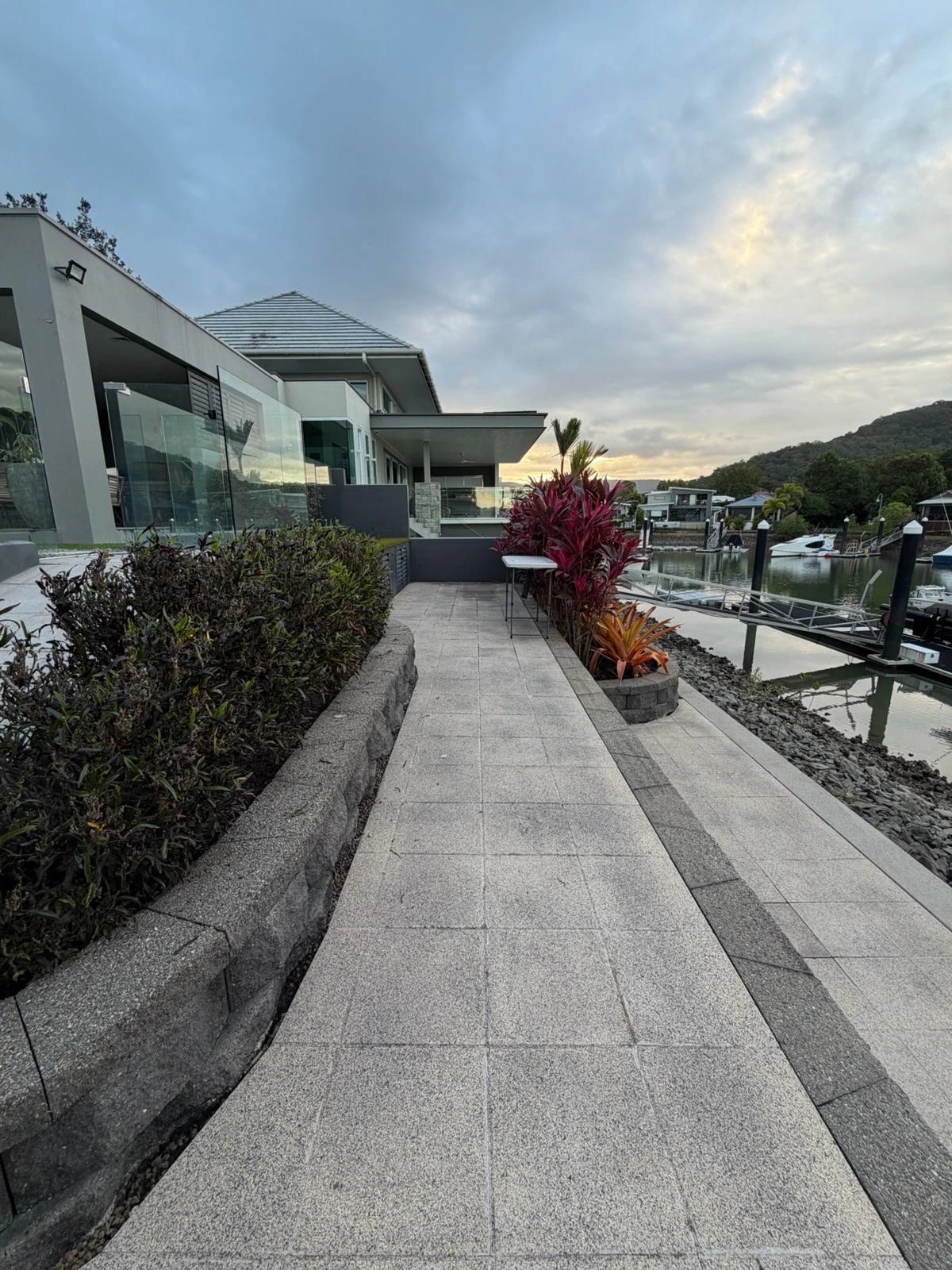
A waterfront property carrying salt haze and mould. Washed under low pressure, paint untouched.
HOW A HOUSEWASH RUNS.
The same six steps as every job on this site, because a process that changes per service isn’t a process.
- 01
Tell us about the place
Address, single or double storey, what the walls are made of, and a photo of the worst elevation.
- 02
The measure
Most residential quotes are worked out remotely from satellite imagery and your photos. Prestige and complex properties get a site visit.
- 03
The quote
In writing, with the elevations and inclusions named, before a date is agreed.
- 04
Walk-around & before photos
Openings, fittings, planting and existing paint damage all noted and photographed with you if you’re home.
- 05
Treat, dwell, rinse
Applied low and slow, given its time, rinsed top down with fresh water. Paths and surrounds washed down after.
- 06
After photos, then the invoice
You see the result and confirm you’re happy before anything is billed.
THE THINGSPEOPLE ACTUALLYASK.
Still not covered? Ring Blake on 0495 090 010. Enquiries are answered the same day.
Will the pressure damage my paint or my weatherboards?
Not at the pressure a house gets. Cladding is washed under about 300 PSI — roughly a strong garden hose — with the cleaning done by the treatment rather than by force. Where paint is already failing, washing will reveal it, and you’ll be told that on the walk-around before we start.
Can you get water behind my walls?
That is exactly what the low-pressure approach is designed to prevent. High pressure aimed at a join or a weep hole is how water ends up in a cavity, so we don’t use it on walls. Openings near the work area are closed before we start.
How long does it last?
It varies with aspect and shade as much as anything — a shaded south wall holds its clean longer than one that copes with full sun and salt air. Generally you’ll get a good six months before it needs another look.
Do you do the roof at the same time?
Very often, and it is the sensible order — roof first, walls second, so nothing coming off the roof lands on a wall that has just been cleaned. It is quoted as one visit rather than two.
Do I need to be home?
No, as long as we have access to the property and an outdoor tap. Plenty of jobs are done while people are at work — you get the before and after photos either way.
OFTEN BOOKEDAT THE SAME TIME.
FOUR TAPS.ONE NUMBER.NO PHONE CALL.
Tap what you’ve got and the estimate builds as you go. Blake measures the real thing before it becomes a fixed price, and every enquiry is answered the same day.